
Pep talk - May/June 2026
Qkine now supplies Defined Bioscience's animal-free cell culture media supplements
This month we have a monumental announcement - the launch of our first distribution product. Prior to this, Qkine has been purely a recombinant protein manufacturer, manufacturing all our products onsite in our facility in Cambridge, UK.
Now, we are excited to announce we have partnered with Defined Bioscience to distribute their animal-free cell culture media supplements.
Defined Bioscience has set out to solve the scale bottleneck faced by cell culture scientists. Existing stem cell media and supplements are expensive, variable and difficult to scale. Animal-derived, poorly defined media components further compound these issues, adding to the expense and reducing reproducibility. Defined Bioscience’s cell culture media supplements are animal-free, fully defined, reproducible, and affordable.
Defined Bioscience’s animal-free media supplements are the perfect pairing for Qkine’s animal-free growth factors, cytokines and adhesion proteins. Both companies share the same customer-focused values, quality, transparency, and reproducibility, and strive to support the scientific community with the best tools for cell culture. Qkine’s decision to supply Defined Bioscience’s media supplements alongside our animal-free proteins to our customers and collaborators will further our goal to make available entirely animal-free, traceable and scalable workflows.
HiDef® B8 stem cell growth medium - a complete, serum-free, defined formulation designed for the feeder-free maintenance and expansion of human pluripotent stem cells (PSCs) in an undifferentiated state. HiDef B8 is a cost effective and convenient solution for iPSC culture allowing for reproducible, weekend free stem cell culture.
HiDef® B8 contains insulin, ascorbic acid-2-phosphate, transferrin, sodium selenite, TGF-β3, NRG-1, and thermostable FGF-2/bFGF. The addition of further components is not required.
Ready-CEPT® cell viability supplement - a defined formulation designed for improved stem cell survival and growth during routine passaging, cryopreservation, and freeze-thaw recovery. Ideal for sensitive stem cell cultures, Ready-CEPT can also improve cell survival in a wide range of cell types including primary cells and organoids.
Ready-CEPT is a single-vial cocktail of chroman-1 (a ROCK inhibitor), emricasan (a pan-caspase inhibitor), polyamines (putrescine, spermine, and spermidine; polycations for cell growth support), and trans-ISRIB (an ISR inhibitor).
HiDef® N-2 neural medium supplement - a defined formulation designed for the culture and growth of neurons, neural progenitor cells (NPCs), stem cells, and neuroblastoma (NB) cells, among other cell types, as well as differentiation of embryonic and induced pluripotent stem cells in neural and pancreatic lineages.
HiDef N-2 is a combination of insulin (to stimulate glucose uptake), transferrin (to facilitate iron transport), sodium selenite (a potent antioxidant and common medium component), putrescine (for cell growth support), and progesterone (for promoting growth and neuronal differentiation and stimulation).
N-2 supplement is required for dopaminergic neuron differentiation and is the perfect pairing with our Dopaminergic neuron differentiation kit (Qk517) and also astrocyte differentiation with our Astrocyte differentiation kit (Qk520). Qkine differentiation kits are fully transparent, designed to allow optimization and save 30-40% on buying the individual growth factors.
HiDef® ITS cell culture supplement - a defined formulation designed for the routine maintenance and low-density attachment of adherent cells under reduced serum conditions.
HiDef® ITS is a combination of insulin (to stimulate glucose uptake), transferrin (to facilitate iron transport), and sodium selenite (a potent antioxidant and common component supplied by serum), previously shown to reduce the amount of FBS needed in the culture of a wide range of cell types, including primary cells, immortalized cell lines, and stem cells.
ITS supplement is perfect in combination with our iPSC culture kit (Qk512).
Reflections on the FDA Modernization Act 3.0 and how Qkine can be an enabling supplier for human-relevant, 100% animal-free, reproducible NAM workflows
In case you missed it, the 16th of December 2025 was a significant day in the US Senate, passing the FDA Modernization Act unanimously, validating a shift away from conventional animal testing which has relied notoriously on mice, rats, rabbits, beagles, and primates to name a few, finally towards human-relevant, non-animal models.
https://centerforahumaneeconomy.org/senate-passes-fda-modernization-act-3-0-by-unanimous-consent/
The case has long been clear why. The scientific community has always recognized that animals do not provide adequate models of human health and disease.
The intent by the FDA – setting out a roadmap to reduce animal testing in pre-clinical safety studies with validated new approach methodologies – NAMs – leveraging organoids, organ-on-a-chip (OOAC) and microphysiological systems (MPS), in silico and computational modelling (AI I’m sure will have a significant role here), and in vitro-cell based assays. And it goes further in the draft guidance setting out validation expectations around these models, their context of use, human biological relevance, how to technically characterize them and their fit-for-purpose use.
Why? In order to streamline drug R&D, to become more ethical, more efficient, ensure patients benefit from safer therapies, and get those therapies to patients faster – all without the need for animals testing and ushering a new era in drug discovery R&D finally into the 21st century.
So you may be asking yourself, so what? How does Qkine fit into all this?
Pluristyx and Qkine Announce a Reciprocal Distribution Agreement in Support of Optimized Growth Factor Differentiation of Induced Pluripotent Stem Cell (iPSC)
This month, Qkine announced their partnership with Pluristyx, a leading provider of clinical-grade induced pluripotent stem cell (iPSC) solutions. The partnership pairs Pluristyx’s proprietary iPSC lines with Qkine’s portfolio of ultra-pure, bioactive proteins. By prospectively qualifying Qkine’s growth factors for use with Pluristyx’s Ready-to-Differentiate™ (RTD™) cells, the two companies offer a "ready-to-use" solution designed to improve experimental consistency, reduce development timelines, support reliable, rapid, and iterative R&D and manufacturing, and ensure a seamless transition from discovery to clinical applications.

Did you miss?
Qkine launches new product line - QkPlate© pre-prepared dried vitronectin-coated plates
Cell culture plates pre-coated with adhesion proteins or extracellular matrix proteins can be a convenient solution, increasing the efficiency and reproducibility of cell culture. After the launch of our ultra-low endotoxin animal origin-free vitronectin (Qk120) we quickly realized that there were no commercially available pre-coated vitronectin plates, so we set out to develop our QkPlate© human vitronectin coated plates.
Claim your free sample of stem cell factor (SCF)
Qkine actively supports hematopoietic stem cell and immune cell research by manufacturing highly bioactive and animal-free recombinant proteins that will benefit your research with increased efficiency in both your budget and the reproducibility of your cell cultures.
We are so confident you’ll love our products we’re offering a 25 μg SCF sample for free!*
Until 31st July 2026 complete the form to get your free sample.

What's new?
Uniquely animal-free
Recombinant human GDF-11 (BMP-11) protein (Qk126)
Growth differentiation factor -11 (GDF-11) also known as bone morphogenetic protein 11 (BMP-11) is a member of the transforming growth factor-beta (TGF-β) superfamily, a group of proteins that play key roles in regulating cell growth, survival and differentiation. GDF-11 plays a key role in cardiac and neuronal development.
Qkine recombinant GDF-11 (BMP-11) is provided as a pure 25 kDa dimer with high and consistent bioactivity lot-to-lot.
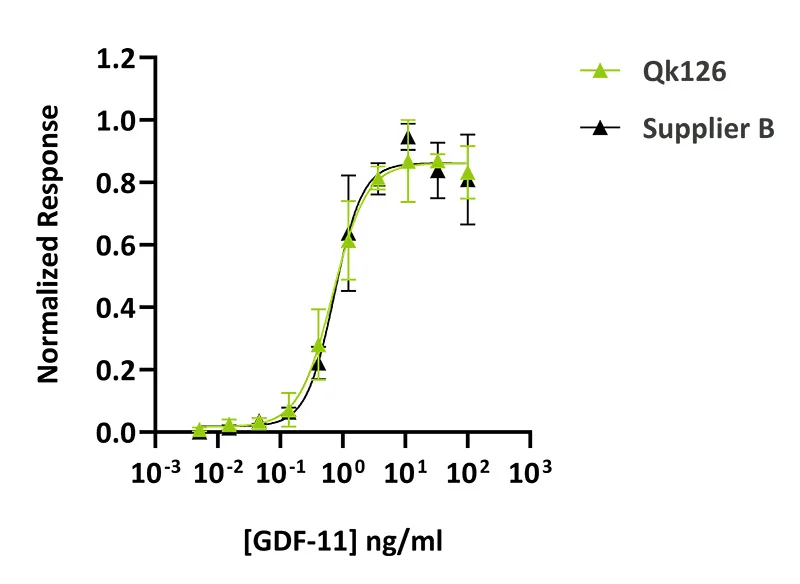
Qkine animal origin-free GDF-11 was found to be as bioactive as GDF-11 from an alternative supplier. GDF-11 activity was determined using a Smad reporter assay in transfected HEK293 cells. Cells were treated in triplicate with a serial dilution of Qkine GDF-11 (Qk126, green) or alternative GDF-11 (Supplier B, black) for 6 hours. Firefly activity was measured and normalized to the control Renilla luciferase activity. Data from Qk127 lot #204827.
Recombinant human activin AB protein (Qk127)
Activins are members of the transforming growth factor-beta (TGF-β) superfamily, a group of proteins that play key roles in regulating cell growth, survival and differentiation. In vivo activins exist as homodimers or heterodimers, the activin heterodimer AB is widely expressed and biologically active with similar functions to the activin AA homodimer.
Qkine recombinant activin AB is a bioactive 25.7 kDa heterodimer, animal origin-free, tag free and carrier free for improved reproducibility.
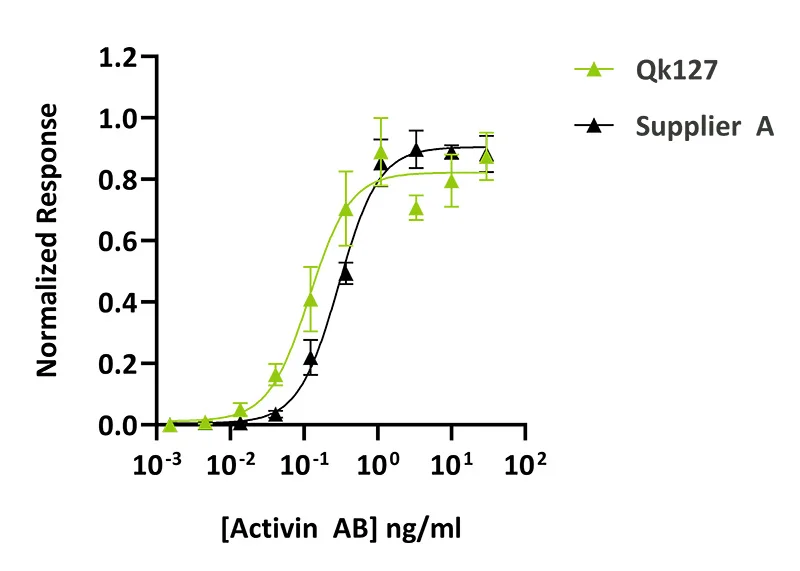
Qkine activin AB was as bioactive as activin AB from an alternative supplier. Activin AB activity was determined using a Smad reporter assay in HEK293 cells co-transfected with the activin B co-receptor ALK7. Transfected cells were treated in triplicate with a serial dilution of Qkine activin AB (Qk127, green) or alternative activin AB (Supplier A, black) for 6 hours. Firefly activity was measured and normalized to the control Renilla luciferase activity. Data from Qk127 lot #204819.
Recombinant human nodal protein (Qk029)
Nodal is a transforming growth factor β (TGF-β) family member which has an essential role in embryonic development. Nodal signaling controls endoderm and mesoderm germ layer specification whilst preventing neuroectoderm formation. It has also been implicated in cancer metastasis. Recombinant nodal has been found to maintain pluripotency in embryonic stem cells (hESCs) and induced pluripotent stem cells (iPSCs).
Qkine recombinant human nodal has been manufactured to be completely animal origin-free with reliable and consistent bioactivity for the reproducible maintenance of pluripotency in stem cells. Recombinant nodal is a 25.9 kDa homodimer, tag and carrier free.
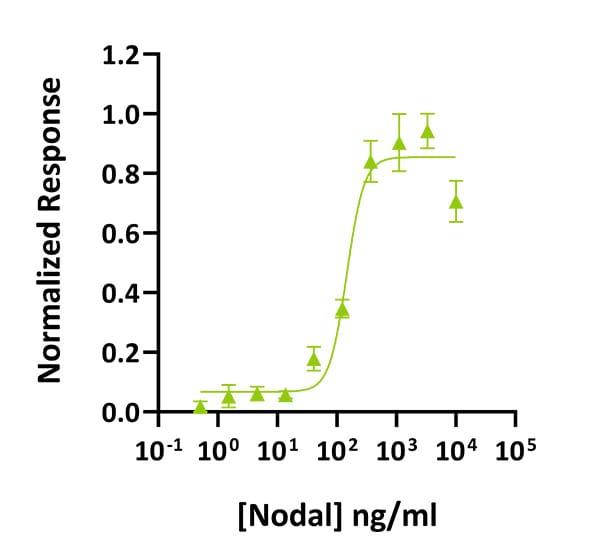
Recombinant nodal activity was determined using a P19 cell CAGA luciferase reporter assay. Transfected P19 cells were treated in triplicate with a serial dilution of Nodal for 6 hours. Firefly activity was measured and normalized to the control Renilla luciferase activity. Data from Qk029 lot 204811. EC50 = 147 ng/ml (5.68 nM).
Application note
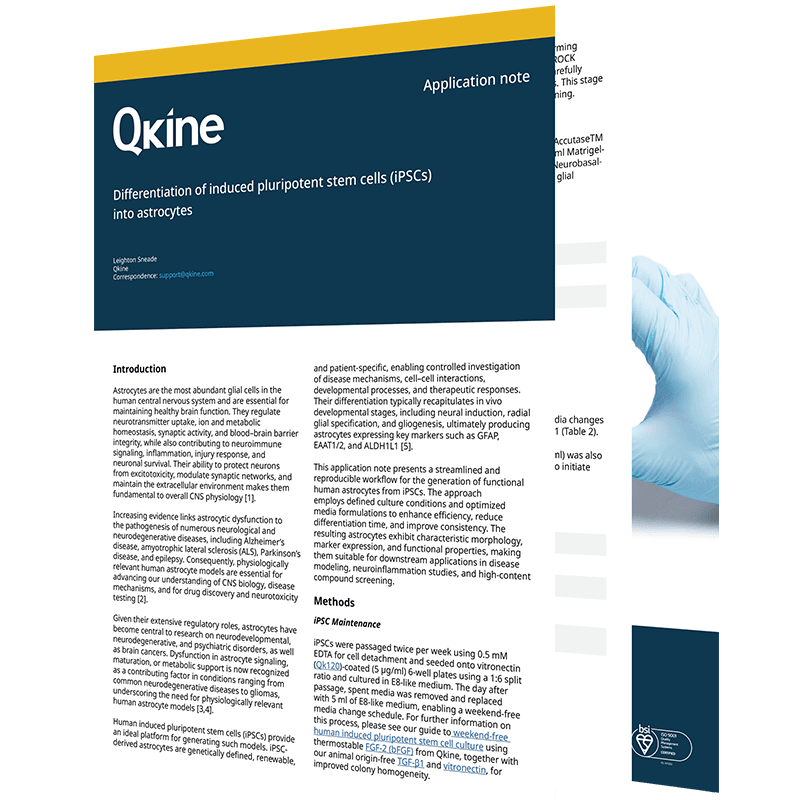
Differentiation of induced pluripotent stem cells (iPSCs) into astrocytes
Astrocytes are the most abundant glial cells in the human central nervous system and are essential for maintaining healthy brain function. They regulate neurotransmitter uptake, ion and metabolic homeostasis, synaptic activity, and blood–brain barrier integrity, while also contributing to neuroimmune signaling, inflammation, injury response, and neuronal survival. Their ability to protect neurons from excitotoxicity, modulate synaptic networks, and maintain the extracellular environment makes them fundamental to overall CNS physiology.
This application note presents a streamlined and reproducible workflow for the generation of functional human astrocytes from iPSCs using Qkine FGF2-G3 (Qk052), noggin (Qk034), EGF (Qk011) and CNTF (Qk063). The approach employs defined culture conditions and optimized media formulations to enhance efficiency, reduce differentiation time, and improve consistency. The resulting astrocytes exhibit characteristic morphology, marker expression, and functional properties, making them suitable for downstream applications in disease modeling, neuroinflammation studies, and high-content compound screening.
HiDef® N-2 neural medium supplement is also suitable for use in this protocol.
Product highlight
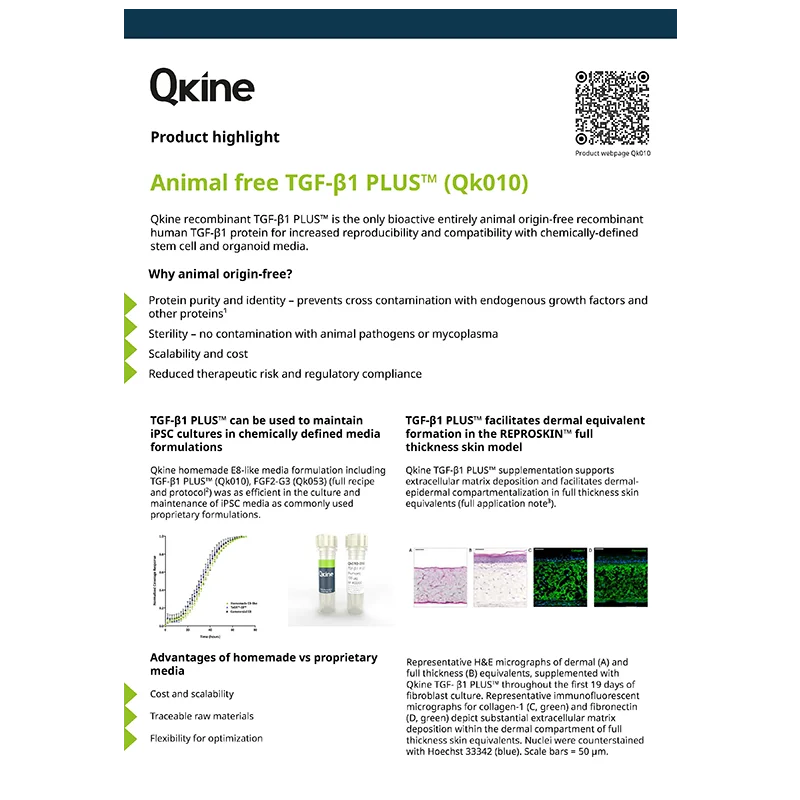
Recombinant human TGF-β1 PLUS™ protein (Qk010)
Transforming growth factor-beta 1 (TGF-β1) is a pleiotropic cytokine that regulates various cellular processes, including cell proliferation, growth, differentiation, motility, and apoptosis. It is an essential growth factor in many embryonic and induced pluripotent stem cell maintenance media, including the commonly used E8, StemPro, and mTeSR media. TGF-β1 also promotes the differentiation of various cell types such as fibroblasts, epithelial cells, and immune cells.
Qkine recombinant TGF-β1 PLUS™ protein is the first entirely animal origin-free recombinant human TGF-β1 protein for highly reproducible results and compatible with chemically-defined stem cell media.

Qkine TGF-β1 PLUS™ was found to be more bioactive than mammalian-expressed TGF- β1 from alternative suppliers. Bioactivity was determined using a TGF-β1-responsive (CAGA) firefly luciferase reporter in transiently transfected HEK293T cells. Cells were treated with a serial dilution of TGF-β1 PLUS™ (Qk010, green) or TGF-β1 from two alternative suppliers (black) for 6 hours in triplicate. Firefly luciferase activity was measured and normalized to the control, Renilla luciferase.
Recent publications
Organoids serve as viable in vitro model for functional precision medicine for mesonephric-like adenocarcinoma of the ovary
Holthaus D, Le HD, Matzner L et al. bioRxiv, April 2026
Researchers show that existing protocols for high-grade serous ovarian carcinoma can be used for the generation of organoids derived from mesonephric-like adenocarcinoma. These organoids could be used as an essential tool for functional precision medicine purposes. This functional data could be applied as an additional layer for molecular tumor boards diagnostics by supporting molecular datasets and even identify targetable pathways beyond genetic variations, thus offering novel therapeutic options particularly for rare and aggressive tumors.
A defined 2D system for generating and expanding human basal radial glia from iPSCs
Derivation and characterization of an embryonic‑derived muscle progenitor cell line from Atlantic salmon (Salmo salar)
A region-specific murine intestinal monolayer platform for assessing iron form–dependent transepithelial transport
All our growth factors are manufactured within a stringent quality framework, ensuring high-quality proteins that maintain robust, reproducible, and physiologically relevant stem cell and organoid cultures that adhere to our Nine-point Quality Commitment.
Upcoming Events
- ISSCR 2026 Annual Meeting | 8-11 July 2026 | Montreal, Canada
- Human Development: Stem Cells, Models, Embryos | 7-9 September 2026 | University of Warwick, UK
- Gastruloids & Embryoids Workshop 2026 | 21-22 September 2026 | Cambridge, UK
We'd always love to meet you at any event, contact support@qkine.com to make an appointment.
What’s next?
Qkine are committed to producing the most high quality and bioactive growth factors and cytokines, coming soon to our extensive portfolio:
- Recombinant human IL-21 protein (Qk129) - Expected June 2026
- Recombinant human GDF-8 (myostatin) protein (Qk124) - Expected July 2026
- Recombinant human BMP-7 protein (Qk028) - Expected July 2026
- Recombinant human activin AC protein (Qk128) - Expected July 2026
If you wish to be notified when proteins are released, contact us customerservice@qkine.com