
Technote | CHIR99021 and LY294002 (Qk1101Qk1102)
Qkine small molecules CHIR99021 and LY294002 can be used for endoderm differentiation from iPSC
Differentiating iPSCs into endoderm lineage of cells provides unparalleled potential for disease modeling, drug discovery, and cell-based therapies, all without the ethical concerns associated with using embryonic stem cells. The endoderm layer forms essential organs like the liver, pancreas, lungs, and the lining of the gastrointestinal tract.
Qkine small molecules are highly pure and validated in differentiation protocols to ensure maximum confidence for your stem cell workflow.
Differentiation of iPSC into endoderm
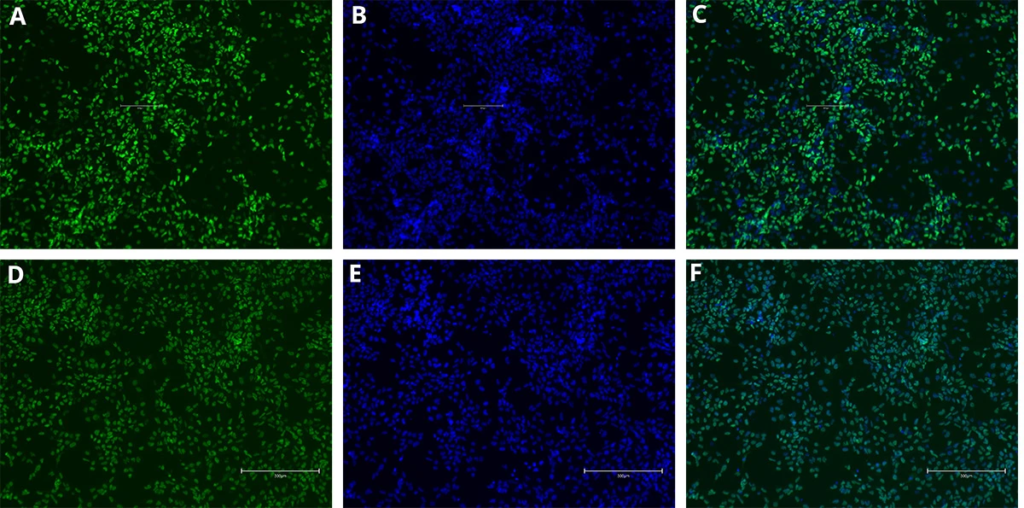
Immunocytochemistry of endoderm markers in differentiated iPSC. SRY-box transcription factor 17 (SOX17) [Green, A], Hoechst 33258 [Blue, B], combined SOX17 and Hoechst [C] and transcription factor GATA4 [Green, D], Hoechst 33258 [Blue, E], combined GATA4 and Hoechst [F]. Images were acquired using the EVOS M5000 system (scale bar = 300 µm).
Qkine recombinant proteins and small molecules have the advantage of being highly pure and animal origin-free, giving lot-to-lot consistency in activity for reproducible differentiation of stem cells and organoids.
All our recombinant proteins are animal-free and come with Bioactivity. Guaranteed.
About our products
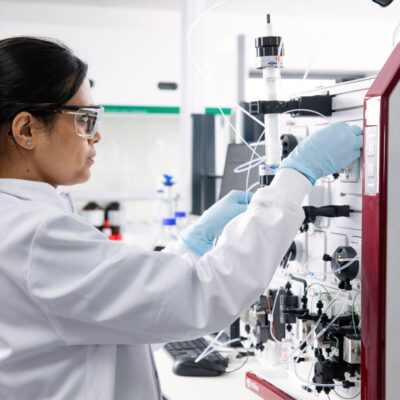
Nine-point Quality Commitment
Qkine is committed to manufacturing bioactive proteins of the highest quality to enhance scientific outcomes and improve reproducibility.
Quality policy
Learn more about our quality management system implemented to comply with the requirements of ISO 9001: 2015.

Animal-free
Qkine manufactures recombinant proteins in a dedicated animal-free laboratory located in an ISO 9001: 2015 certified facility.
Contact us
Our science team is here to help, please contact us if you have any questions.