
Technote | Y-27632 (Qk1104)
Qkine Y-27632 dihydrochloride improves iPSC survival during thawing
Human induced pluripotent stem cells (iPSC) are an in vitro model that are functionally immortal and have the capacity to proliferate while maintaining the ability to, hypothetically, differentiate to any somatic cell type. Interest in iPSC generation has grown significantly because they can be used across various research areas and fields without facing the same ethical concerns associated with the use of embryonic stem cells.
Qkine Y-27632 can be used during iPSC thawing and plating
ROCK inhibitor Y-27632 dihydrochloride is routinely used during thawing and plating of iPSCs to improve cell survival. We have validated our Y-27632 (Qk1104) for thawing iPSCs and plating for differentiation into multiple lineages.
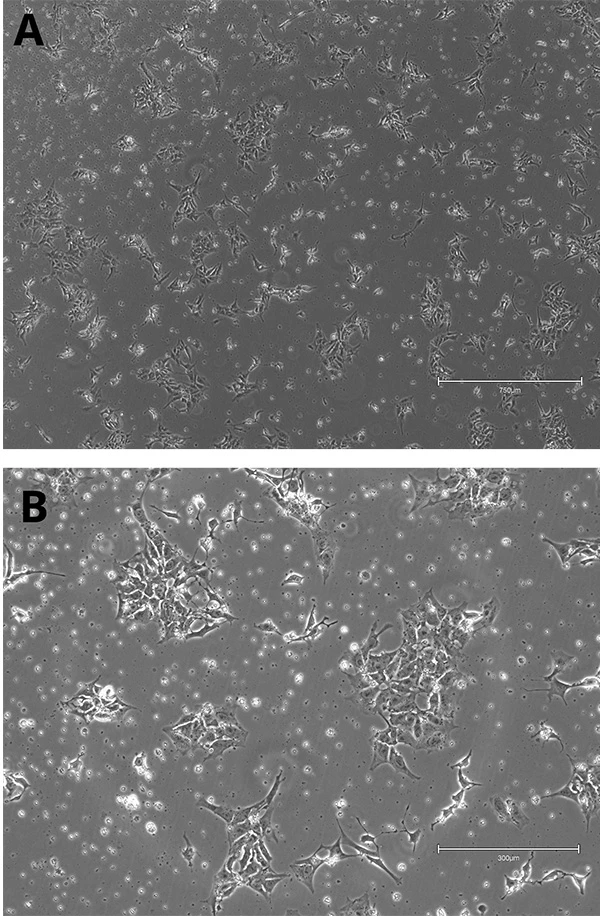
Qkine recombinant proteins and small molecules have the advantage of being highly pure and animal origin-free, giving lot-to-lot consistency in activity for reproducible differentiation of stem cells and organoids.
All our recombinant proteins are animal-free and come with Bioactivity. Guaranteed.
About our products

Nine-point Quality Commitment
Qkine is committed to manufacturing bioactive proteins of the highest quality to enhance scientific outcomes and improve reproducibility.
Quality policy
Learn more about our quality management system implemented to comply with the requirements of ISO 9001: 2015.

Animal-free
Qkine manufactures recombinant proteins in a dedicated animal-free laboratory located in an ISO 9001: 2015 certified facility.
Contact us
Our science team is here to help, please contact us if you have any questions.